
Does Workers’ Comp Cover Compression Stockings? Coverage Rules Explained

If you were injured at work and your doctor prescribed compression stockings, one of your first questions is probably whether workers’ compensation will pay for them. The short answer: it depends on causation, not the garment itself.
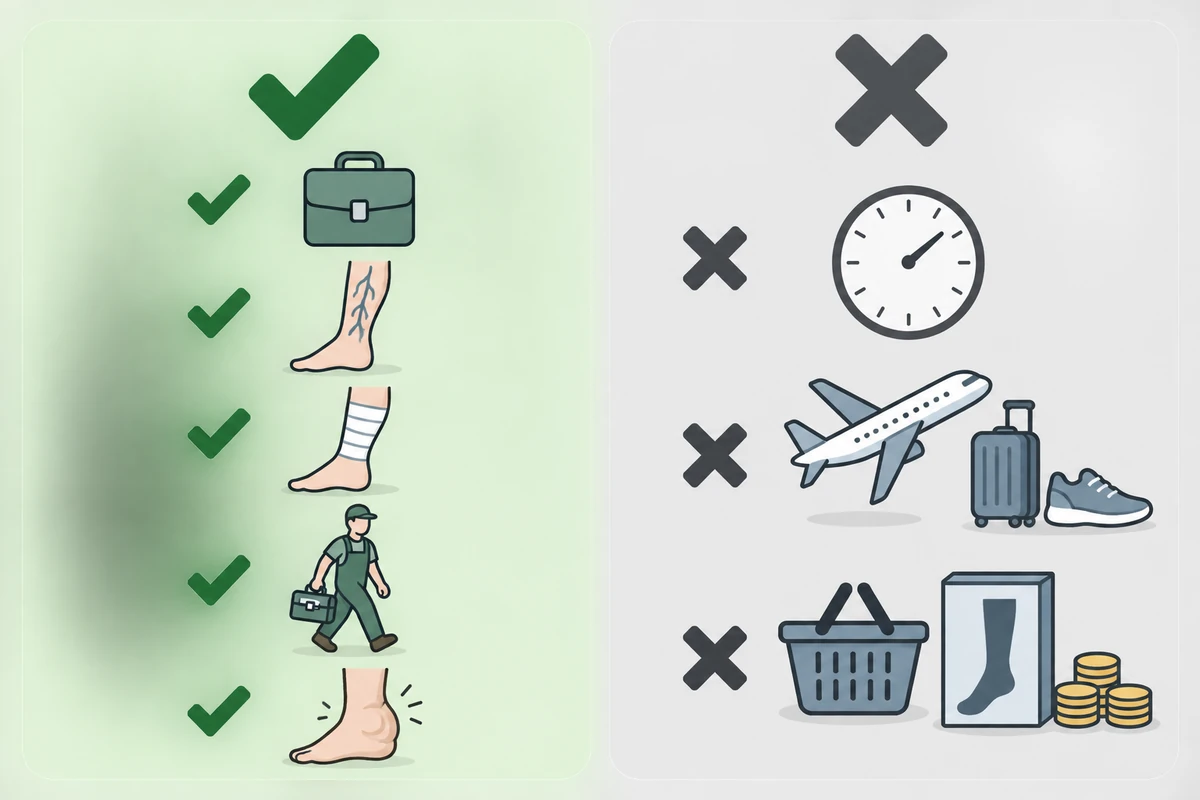
Workers’ compensation may cover compression stockings when a treating physician documents that they are medically necessary to treat a work-related injury or condition — for example, DVT prevention or recovery after a workplace injury, post-surgical recovery from a work injury, or venous insufficiency aggravated by your job. Each state runs its own workers’ comp system, so there is no single national rule. Coverage depends on causation: the compression garment must treat a condition your work caused or worsened. Stockings for a pre-existing condition with no work aggravation, or for general off-the-job use, are typically not covered.
Here’s a quick overview of what tends to be covered and what typically isn’t:
| Typically Covered | Typically Not Covered |
|---|---|
| Work-related DVT prophylaxis or recovery | Pre-existing chronic venous insufficiency with no work aggravation |
| Post-surgical recovery from a work injury | Off-duty, travel, or athletic use |
| Occupational aggravation of venous insufficiency | Unprescribed over-the-counter purchases |
| Post-traumatic lymphedema from an industrial injury | General wellness or preventive wear outside a compensable claim |
One important contrast: workers’ comp has no single federal analogue to the Lymphedema Treatment Act. Coverage flows from each state’s medical-benefit mandates, which makes documentation of the work connection the foundation of everything that follows.
How Does Workers’ Comp Pay for Medical Equipment?
Workers’ compensation is a state-based insurance system, and nearly every state requires employers to carry it. Medical benefits for work injuries are a mandatory part of every state system — and unlike Medicare, accepted treatment usually costs the injured worker $0 out of pocket, with no deductible or coinsurance.
Definition — Workers’ compensation: A state-regulated insurance program requiring most employers to provide medical care and wage benefits to employees injured on the job, regardless of fault. Each state sets its own rules, fee schedules, and dispute processes. Federal programs (FECA for federal employees, the Longshore Act, and Black Lung benefits) are separate exceptions covering federal workers. (Pennsylvania Department of Labor & Industry)
A few structural points worth understanding:
- There is no federal fee schedule for state systems. Federal schedules administered by the Department of Labor’s OWCP apply only to federal programs like FECA — not to your state’s workers’ comp claims. (U.S. Department of Labor — OWCP)
- Federal employees follow FECA, a separate statute with its own schedule of medical benefits. (Congressional Research Service)
- The $0 cost-share is the biggest contrast with Medicare, where DME typically comes with 20% coinsurance after the deductible. We compare the two payers in detail below — see our Medicare coverage comparison.
When Does Workers’ Comp Cover Compression Stockings?
Workers’ comp may cover compression stockings in four situations: preventing or treating DVT after a workplace injury, recovering from surgery for a work injury, managing venous insufficiency that your job aggravated, and treating lymphedema caused by a work injury. In every case, a treating physician must document medical necessity tied to the compensable injury.
DVT Prevention or Recovery After a Workplace Injury
When a workplace injury, surgery, or period of immobilization puts you at risk of deep vein thrombosis, physicians commonly prescribe graduated compression as part of standard prophylaxis and recovery. Clinical guidelines suggest graduated compression may help support venous return during immobilization. When the prescription ties directly to the compensable injury, the garment is typically supplied as a standard medical benefit — provided the claim itself is accepted.
Post-Surgical Recovery From a Work Injury
If you undergo surgery for a compensable work injury, the garments your surgeon prescribes afterward are routinely covered as part of the authorized treatment plan. This is usually the most straightforward coverage scenario, because the causal chain — injury, surgery, prescribed recovery equipment — is short and well documented. If your recovery plan includes compression, our guide to compression stockings after surgery explains what to expect during recovery.
Venous Insufficiency Aggravated by Your Occupation
Prolonged-standing occupations — nursing, warehouse work, retail, teaching — are frequently associated with varicose veins and chronic venous insufficiency (CVI). This is the causation battleground: gradual-onset conditions are harder to link to work than a discrete injury. However, the legal doctrine of aggravation or acceleration can make the work-related increment of a pre-existing condition compensable (doctrine framing only — consult your state board or an attorney). Strong physician documentation connecting your symptoms to occupational factors is essential. Compression at 20 mmHg and above is generally a clinical decision — a licensed provider should select the level for you; our compression levels explained guide walks through what the levels mean.
Lymphedema Secondary to a Work Injury
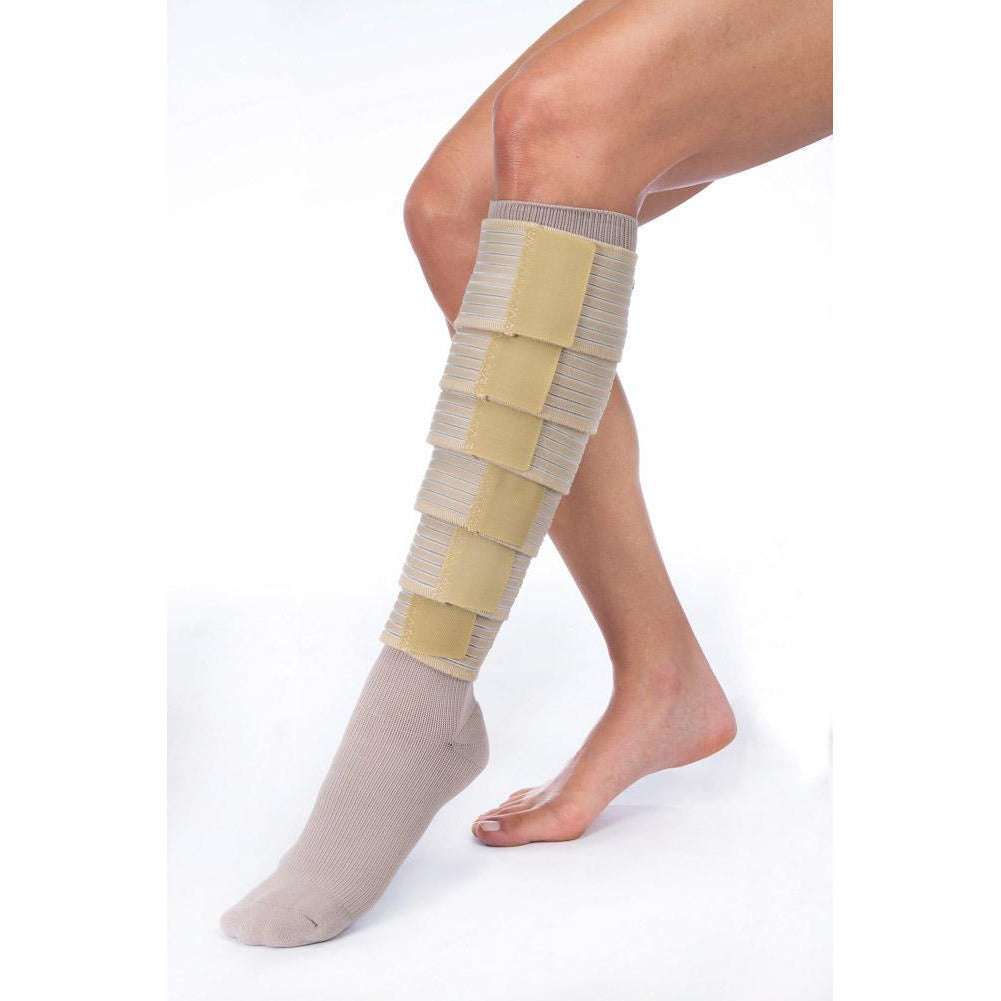
Post-traumatic or post-surgical lymphedema arising from an industrial injury is generally covered as treatment of the compensable condition. Depending on the diagnosis, a physician may prescribe a compression garment or an adjustable wrap system — for example, FarrowWrap products are designed to support edema and lymphedema management when fitted and prescribed appropriately.
Are Compression Stockings Considered Durable Medical Equipment by Workers’ Comp?
Yes — when medically necessary and tied to the compensable injury, compression stockings are supplied as HCPCS-coded durable medical equipment (DME) under workers’ comp medical benefits. States publish their own DME fee schedules, and some items require prior authorization before they can be supplied.
Key mechanics to know:
- HCPCS coding. DME under workers’ comp is billed through standardized HCPCS codes listed in state fee schedules. For example, New York’s Workers’ Compensation Board publishes a DME fee schedule and FAQ explaining which codes apply and what documentation is expected. (NY WCB — Medical Fee Schedules)
- Prior authorization logic. Items flagged as requiring “PAR” (Prior Authorization Request) always need approval before supply. Treatment that follows Medical Treatment Guidelines is generally pre-authorized.
- State-by-state variation. Texas and Minnesota, like New York, publish their own fee-schedule and utilization-review frameworks — the concepts are consistent (documented medical necessity, coded billing, prior authorization where flagged), even though the processes differ. (Texas Department of Insurance; Minnesota Department of Labor & Industry)
How Do I Get Compression Stockings Approved Through Workers’ Comp?
The path is: report your injury to your employer (many states allow roughly 30 days), let the insurer accept or contest the claim, have your treating physician document medical necessity with a prescription tied to your injury diagnosis, and obtain authorization before supply. Your provider bills through the workers’ comp system, not retail checkout.
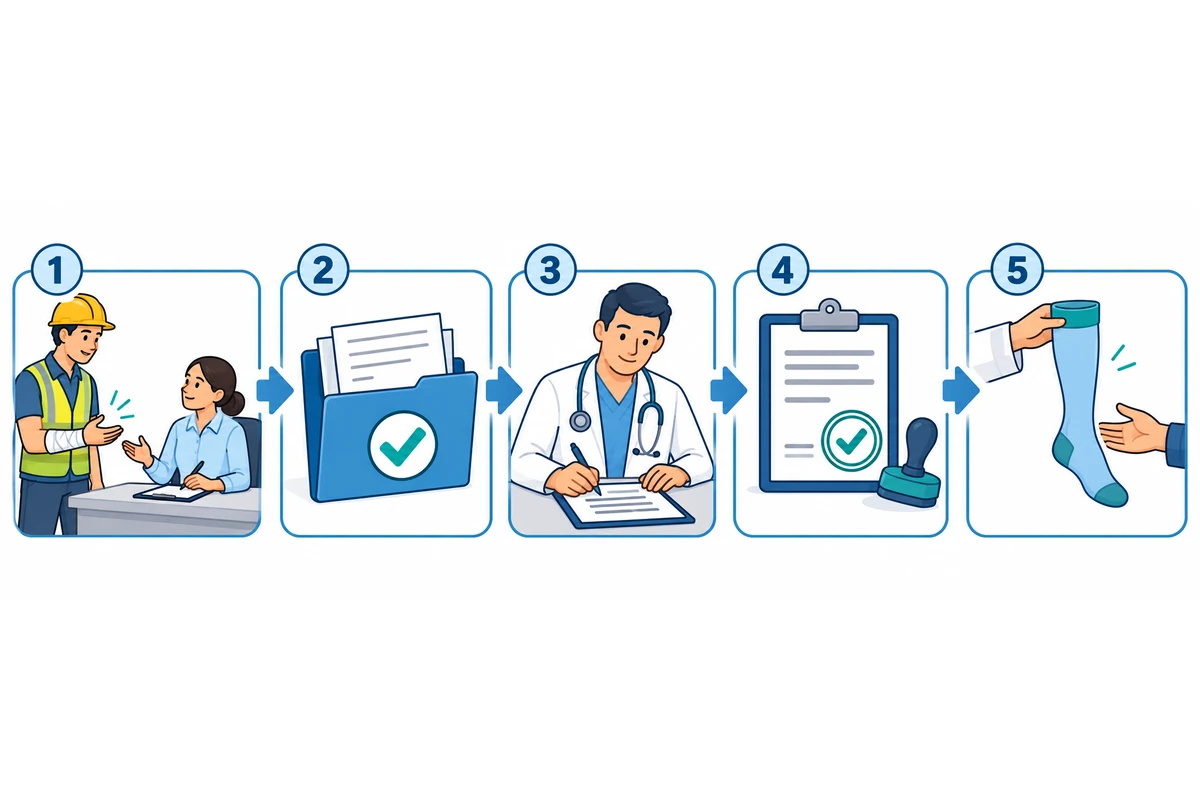
- Report your injury promptly. State deadlines vary (many allow roughly 30 days), but waiting can give the insurer grounds to dispute causation.
- The claim is filed; the insurer accepts or contests compensability. If the injury itself is contested, no equipment is approved until that resolves.
- Your physician documents necessity with an HCPCS-coded order specifying garment type and compression level — commonly 30–40 or 40–50 mmHg after injuries and surgery, though any level at 20 mmHg or above is a clinical decision.
- Authorization. In PAR states (for example, New York), flagged items always require prior authorization; in utilization-review states (for example, California and Texas), the provider submits a Request for Authorization.
- Supply and billing. Once authorized, the supplier provides the garment and bills through the workers’ comp system under the state’s fee schedule.
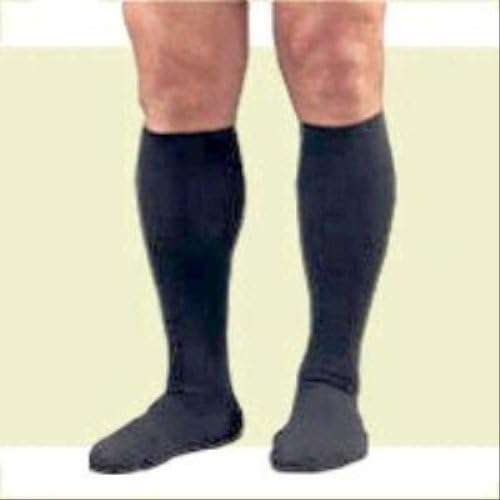
Correct fit matters for the garment to do its job regardless of how coverage resolves. Measuring in the morning and following a sizing protocol helps — see our guide on how to measure for compression stockings. If your prescription is for daily wear, value lines such as JOBST Relief and the broader ready-to-wear collection are commonly prescribed options, and occupational wearers often choose styles from our For Men category. If you have questions about insurance pathways generally, our compression stocking insurance billing guide and coverage verification page outline how the process typically works.
What Happens if Workers’ Comp Denies My Compression Stockings?
If an insurer contests your claim or treatment, it may require an Independent Medical Examination (IME) by an insurer-selected physician, and IME reports often carry significant weight in outcomes. You can appeal: some states allow worker-requested exams after adverse IMEs, and disputed medical bills can go to the state board for resolution.
- IME mechanics. In some states — Oregon, for example — workers who receive an adverse IME may have the right to request an independent examination at the insurer’s expense. (Oregon Workers’ Compensation Division)
- Board appeals. Many states let you dispute an unpaid medical bill directly. New York, for instance, provides a form (HP-1.0) for requesting a board decision on an unpaid medical bill. (NY WCB)
- Get appropriate help. This article is general information, not legal advice. For a dispute, consult your state workers’ comp board or a qualified attorney in your state.
What Does Workers’ Comp NOT Cover?
Workers’ comp typically does not cover compression stockings for a pre-existing condition your work did not worsen, for off-duty or general use such as travel or athletics, for unprescribed retail purchases without physician documentation, or — in some states — for treatment after your claim is closed without future medical care reserved.
A few patterns to understand:
- Pre-existing conditions without aggravation. Most states apportion responsibility, covering only the share of a condition caused by work. Florida’s “major contributing cause” standard is one example of how strictly this can be tested.
- Off-duty use. Garments for travel, sports, or general leg fatigue unrelated to the compensable injury fall outside the claim.
- OTC purchases without documentation. A retail receipt without a physician order tied to the injury is typically not reimbursable.
- Claim closure. In some states, once a claim closes without future medical benefits reserved, later equipment requests must be reopened through a formal process.
Workers’ Comp vs. Medicare for Compression Stockings — Which Pays?
Workers’ comp covers garments that treat a work-caused or work-worsened condition, usually at $0 cost to you but only if causation is established. Medicare covers qualifying garments by diagnosis pathway under federal DME rules, typically with 20% coinsurance after the deductible — regardless of how your condition arose.
| Factor | Workers’ Comp | Medicare |
|---|---|---|
| Payer logic | Causation — must be work-caused or work-worsened | Diagnosis — qualifying condition regardless of cause |
| Cost to patient | Usually $0 when the claim and treatment are accepted | Typically 20% coinsurance after deductible |
| Fee schedule | State-published DME schedules | Federal Medicare fee schedule |
| DME coding | HCPCS codes | HCPCS codes |
| Dispute path | State workers’ comp board | Medicare appeals process |
For the full Medicare side of this comparison, read our companion post: Does Medicare Cover Compression Stockings?
Frequently Asked Questions
Does workers’ comp cover compression stockings?
Workers’ comp may cover compression stockings when a treating physician documents that they are medically necessary for a work-related injury or condition. Because every state runs its own system, coverage rules and processes vary. The consistent test is causation: the garment must address something your work caused or worsened.
Will workers’ comp pay for compression socks after surgery?
Yes, when the surgery treats a compensable work injury. Garments prescribed as part of authorized post-surgical treatment are routinely supplied as durable medical equipment. A physician’s order tying the compression level and garment type to your injury diagnosis is the foundation of approval and billing.
What medical equipment does workers’ comp cover?
Broadly, whatever is medically necessary to treat the compensable injury — under state fee schedules and HCPCS coding. It is not a general wellness benefit. Coverage follows documented medical necessity connected to the accepted claim, not a catalog of approved items you can browse.
Does workers’ comp cover DVT from a work injury?
It may, when the DVT arises from a compensable injury, surgery, or immobilization. Compression prescribed as prophylaxis or recovery is standard treatment in those scenarios, so it is typically supplied through the claim. Coverage is never automatic — it depends on claim acceptance and physician documentation.
Can I get workers’ comp for varicose veins from standing all day?
Possibly, but gradual-onset conditions are frequently contested. The aggravation or acceleration doctrine may cover the work-related increment of a condition, and some states apply strict causation standards. Strong physician documentation connecting your venous symptoms to occupational standing is essential, and outcomes depend on your state.
What happens if workers’ comp denies my compression stockings?
The insurer may rely on an Independent Medical Examination, and those reports often control outcomes. You may have options: some states allow worker-requested exams after adverse IMEs, and disputed medical bills can often be appealed to the state board. Consult your state workers’ comp board or an attorney about a specific dispute.
Do I need a prescription for workers’ comp to pay for compression stockings?
Yes. Treating-physician documentation tying the garment to the compensable injury is the foundation of both authorization and billing. An unprescribed retail purchase, even of the identical garment, is typically not reimbursable because nothing connects it to the accepted claim.
Is workers’ comp the same in every state?
No. Each state runs its own system with its own fee schedules, reporting deadlines, authorization rules, and dispute processes. Federal employees follow separate federal programs such as FECA. Always check your own state’s workers’ comp board for the rules that apply to your claim.
Compression Garment Options to Discuss With Your Provider
If your physician determines compression therapy is appropriate, these are common garment types and product families to review. Your provider should choose the garment type, compression level, and fit based on your diagnosis, measurements, and any contraindications.
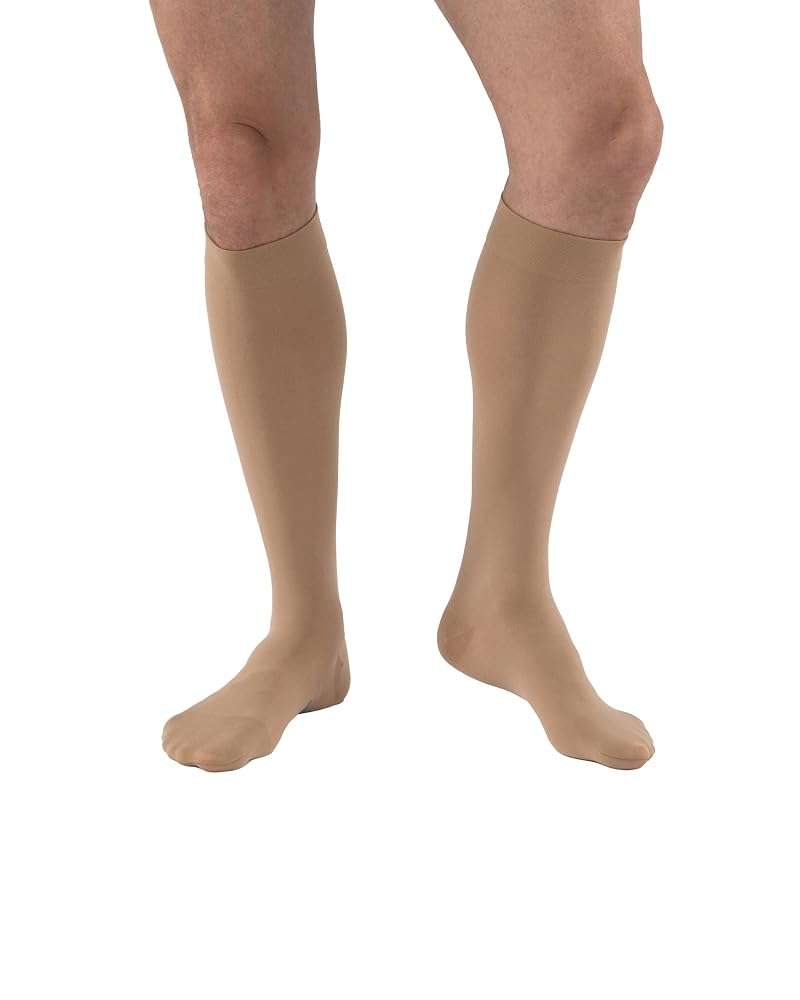
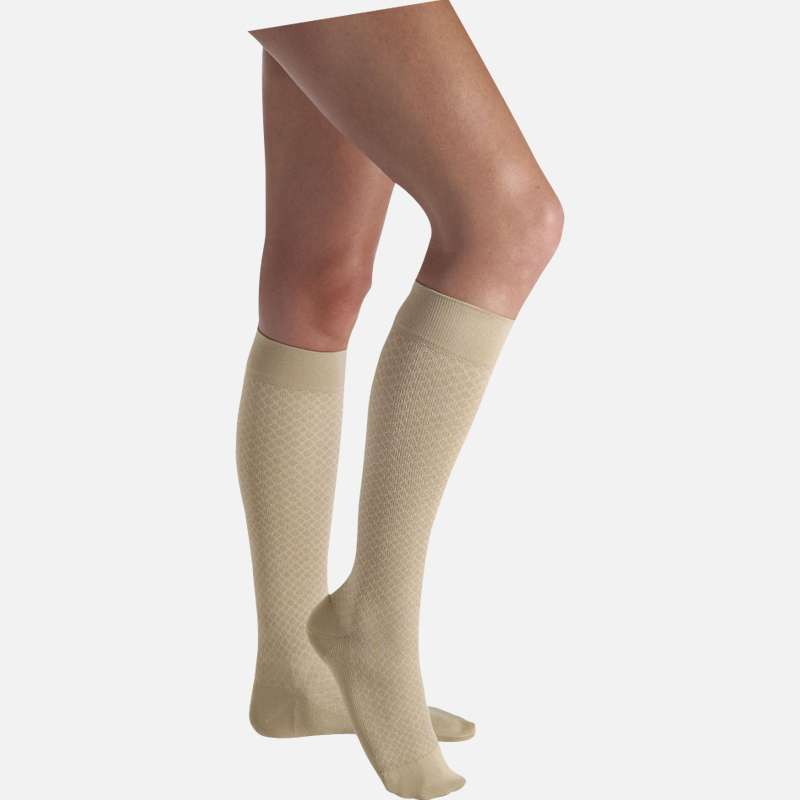
These products are not a substitute for medical advice or a prescription. Do not start compression therapy without appropriate clinical guidance.
The Bottom Line
Workers’ comp coverage for compression stockings is causation-first: the garment must treat something your work caused or worsened, and your physician’s documentation is the thread that holds the claim together. When treatment is accepted, the financial picture is often better than Medicare — no deductible, no coinsurance. When causation is unclear, expect a longer process and consider guidance from your state board or an attorney.
Talk to your treating physician and adjuster about coverage for your prescribed compression garment — then browse our ready-to-wear collection to understand the garment types and compression levels your prescription may specify. Questions about insurance pathways? Start with our compression stocking insurance billing guide or verify your coverage to understand how documentation and billing typically work.
About Pro Therapy Supplies
Pro Therapy Supplies is an authorized JOBST reseller. JOBST is a medical compression brand manufactured by Essity / BSN medical. We help patients and caregivers understand compression levels, sizing, and garment options so they can wear their prescribed therapy correctly. JOBST and product-line names are trademarks of their respective owner.
Medical disclaimer: This content is for educational purposes only and does not replace professional medical advice. Always consult a healthcare provider before starting compression therapy, especially at 20 mmHg or higher, or if you have arterial disease, diabetes, or neuropathy. This content has not been reviewed by a licensed healthcare professional.
Contraindication note: Graduated compression is not appropriate for everyone. People with peripheral arterial disease, uncontrolled heart failure, or certain skin/nerve conditions should not use compression without medical clearance.
Published: 2026-10-11 | Last Reviewed: 2026-10-11 | Author: Pro Therapy Supplies Editorial Team
Related Articles
- Does Medicare Cover Compression Stockings?
- Compression Levels Explained
- How to Measure for Compression Stockings