
Donning Aids for Compression Garments: Gloves, Stocking Donners & Application Tips

By Sean Tang
Published: September 9, 2026 | Last reviewed: September 2026
Donning aids are tools that make putting on compression garments easier. Rubber donning gloves improve grip and protect fabric from snags, while stocking donners hold the garment open so you can step in without bending or pulling. Most people at 20–30 mmHg or higher benefit from at least donning gloves.
If you’ve ever stood in your bedroom at 6 a.m., wrestling a knee-high that feels like it was engineered for a leg three sizes smaller than yours, you already know: the prescription is only half the battle. Getting compression stockings on is the other half — and for people with arthritis, limited mobility, or a fresh 30–40 mmHg script, it’s the half nobody warned them about. Pair it with our guide on how to measure for compression stockings — the right size makes every aid work better.
One safety note before we start:
Stop signs: If you feel pain, numbness, tingling, or notice color change in your foot or leg while donning or wearing compression garments, remove the garment and contact your healthcare provider. Aids make application easier — they never override a fit or circulation problem.
This content is for educational and informational purposes only. It is not a substitute for professional medical advice, diagnosis, or treatment.
| Aid type | Best for | What it solves | Limitations |
|---|---|---|---|
| Rubber/textured donning gloves | Weak grip, protecting fabric from snags | Grip + longer garment life | Still requires some bending and hand strength |
| Stocking donner (frame style) | Limited bending, 20–30 mmHg and above | Holds garment open to step in | Calf-size fit limits; closed-toe only |
| Flexible tube-style donners | Applying via handles without reaching | Reduces grip force needed | Technique takes practice |
| Doffing aids & cuff-flip technique | Removal without digging or pinching | Safe, controlled removal | Solves removal only |
| Thigh-high/waist-high butlers | Higher garments and limited reach | Extends donner concept upward | Less common; style-dependent |
If grip is your bottleneck, start with JOBST donning gloves — the lowest-cost aid and the one most wearers keep using long after the novelty of any gadget wears off.
Why Compression Garments Are Hard to Put On
Donning means putting on a compression garment; doffing means taking it off. Every compression wearer learns both words eventually, usually while sweating over a garment that seems one size too small.
That snugness is by design. Compression stockings contain a high percentage of elastane so the fabric applies real, measured pressure — a 20–30 mmHg garment applies its highest pressure at the ankle, easing gradually up the leg. More importantly, the fabric must be applied at full stretch, laid up the leg in stages, not pulled on like a sock. Pulling a relaxed stocking up by its top band stretches the fabric unevenly, concentrates pressure in the wrong places, and often pops a seam.
Add in morning stiffness, a healing hip, arthritis in the thumbs, or a post-surgical back, and a “simple” daily task becomes the reason people abandon compression therapy entirely. That’s the failure donning aids exist to prevent.
Types of Donning Aids (And Which One Solves Your Problem)
Rather than walk a catalog, let’s match aids to the actual complaints we hear most:
Rubber and textured donning gloves
Grip plus fabric protection. The textured rubber palms grip slippery knit without pinching, so you can smooth fabric up the leg with flat-palm pressure instead of clawing with fingertips. As a bonus, gloves shield the garment from fingernails and jewelry — the most common cause of premature runs and snags. They’re the cheapest aid and the best first purchase. Morning athlete? The same technique applies to sport lines like JOBST ActiveWear.
Metal-frame stocking donners (“butler” style)
A wire or polymer frame holds the stocking’s leg open. You step into the garment while standing, with no bending and minimal hand force — which is why this style suits 20–30 and 30–40 mmHg knee-highs especially well. Check the frame’s calf-size limits before buying: a donner sized for an 18-inch calf won’t comfortably hold a garment for a 22-inch leg.
Flexible tube-style donners
These devices let you pull the garment over a smooth tube or flexible ring, step in, and then pull handles to slide the stocking up and off the device as your foot drops into place. They dramatically reduce the grip force required. We describe this category generically because many manufacturers make versions; the JOBST stocking donner below is our frame-style recommendation.
Doffing aids
Removal is where fingernails do their worst damage. Simple cuff-flip technique (covered in the doffing section below) plus textured gloves solves most cases; dedicated doffing devices exist for people with very limited reach.
Donning butlers for thigh-highs and waist-highs
The same frame concept extended for taller garments. Brief mention here because if you’re struggling with a thigh-high, the right garment choice matters as much as the aid — see how to choose compression stockings for style selection.
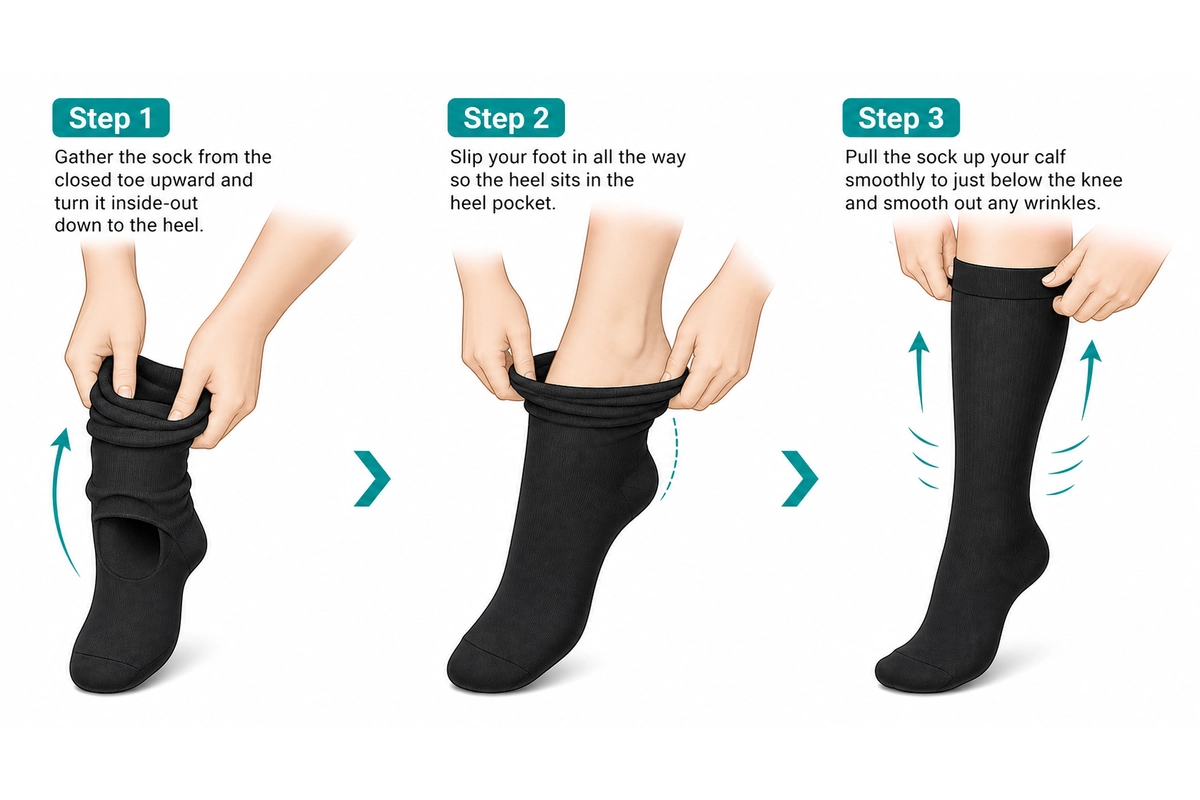
Step-by-Step: How to Put On Compression Stockings by Hand (Heel Pocket Method)
Before any aid, master the baseline technique — it underpins everything else:
- Gather the stocking down to the heel pocket, turning the top half inside out so you’re holding just the foot and heel.
- Slide your foot in until the heel sits precisely in the heel pocket. If the heel isn’t seated, every later step fails.
- Unroll in stages up the calf, laying the fabric flat with open, flat-palm strokes — never pull from the top band. Spread and smooth in sections, working upward.
- Smooth out all wrinkles, especially behind the knee and around the ankle.
- Check the top band — a knee-high should finish about two finger-widths (roughly 2 cm) below the bend of the knee, not inside the crease.
JOBST’s own product guidance has recommended the same staged application for years — turn the stocking inside out to the heel, seat the heel precisely, then gradually pull over instep and calf rather than yanking the garment up in one motion. Staged, flat application is what distributes the gradient correctly.
How to Use a Stocking Donner
The JOBST Stocking Donner — available in Regular (up to 16″ calf) and Large Calf (16″+) — is a frame-style aid with foam handles. Here’s the mechanics:
- Mount the stocking over the frame, toe-down, with the heel pocket aligned to the frame’s heel opening. Keep the fabric smooth — wrinkles mounted now become wrinkles worn all day.
- Sit down and place your foot into the opening, holding both foam handles for balance.
- Step down and in as you slide the donner up and away. Your foot drops into the stocking as the frame releases the fabric.
- Remove the donner, then adjust the fit with your hands (gloved hands work best), smoothing any remaining wrinkles and checking the top band position.
If you’ve tried both a donner and gloves and the garment still fights you, the problem is often the size, not the tool — revisit find your fit before blaming your technique.
How to Use Donning Gloves Correctly
Gloves only work if you use them as designed. The two rules:
- Flat palms, not fingertips. Grip the fabric with the textured palm surface and push the stocking up the leg in stages. Pinching with fingertips stretches small sections of knit unevenly and hurts.
- Push rather than pull. Work from the foot upward, laying fabric on — not dragging the garment up from the top.
The snag protection is real economics, not marketing: a single run from a hangnail can end a $60 garment, and a pair of gloves costs a fraction of that. Prefer cotton against your skin? The JOBST Cotton donning glove with PCV mesh in Medium gives a snug, cool grip for warmer climates or sensitive skin. Sheer knits like the JOBST UltraSheer collection ladder most easily of all — gloves are cheap insurance there.
Skin Prep Before Donning
Skin condition changes friction, and friction decides how hard donning feels:
- Skin must be dry. Damp skin grips the fabric. Dry thoroughly after your shower before donning.
- Lotion goes on after doffing, not before. Fresh moisturizer acts like glue against snug knit. Evening application lets it absorb overnight.
- Inspect your skin daily. Redness, pressure marks, or skin breakdown — especially important if you have diabetes or neuropathy, where sensation may not warn you.
- Toe style matters. Open-toe stockings are easier to seat correctly and let you check toe color during wear; closed-toe styles trap heat and moisture more.
Applying Higher Compression (20-30 mmHg and Above)
Here’s where aids stop being optional for most people. At 20–30 mmHg the fabric applies substantially more pressure than 15–20 mmHg, and at 30–40 mmHg most average hands simply cannot stage-apply the garment reliably. This is the band where gloves become “strongly recommended” and a donner becomes a genuine quality-of-life purchase. Our compression level guide explains the level differences in detail.
JOBST Relief 20-30 mmHg is the line most often prescribed at the levels where aids become necessary — a firm knit that rewards good technique and punishes shortcuts.
And the stop signs from the top of this article bear repeating at this compression level, because the stakes rise with the pressure: pain, numbness, tingling, or color change means remove the garment and call your provider. An aid can fix technique; it cannot fix a garment that’s the wrong size or a circulation issue that needs medical attention.
How to Take Compression Stockings Off (Doffing)
Removal is where most fabric damage happens, so technique matters here too:
- Push the top band down from the inside, working it off the thigh or calf gradually.
- Peel the garment down the leg, turning it inside out as you go — like peeling a banana, not stripping a bandage.
- Never roll the top band down like a tourniquet to “hold” the stocking at the ankle. That concentrated band of pressure can restrict circulation.
If reaching your feet is difficult, a doffing aid or simply pre-folding the top band down before bed the night before makes morning removal much simpler. Compression stockings for men follow the same doffing logic — stiffer fabrics just demand a slower peel.
Care Tips That Make Donning Easier
Garment condition directly affects how hard donning feels:
- Wash after every wear. Skin oils degrade elastane and raise friction. Hand-wash or gentle machine cycle with mild detergent.
- Air dry away from heat. Dryers and radiators cook the elastic; heat-damaged fabric is permanently harder to don.
- Rotate two or more pairs. Elastane needs roughly 24 hours of recovery after a day of wear. A second pair isn’t indulgence — it makes both pairs easier to put on and last longer.
- Replace about every 3–6 months. If donning has gotten mysteriously harder, the garment — not you — may be worn out.
Frequently Asked Questions
What are donning aids for compression garments?
Donning aids are tools that make putting on compression stockings and other compression garments easier. The most common are rubber donning gloves, which improve grip and protect the fabric, and stocking donners — frames or tubes that hold the garment open so you can step into it with less bending and pulling.
Do I really need donning gloves for compression stockings?
At 15–20 mmHg you can often manage by hand. At 20–30 mmHg and above, gloves are strongly recommended: textured palms let you grip the fabric without pinching, and they protect the garment from snags caused by fingernails and jewelry — the most common cause of premature runs.
How do you use a stocking donner?
Pull the stocking, heel down, over the donner frame until the heel pocket sits at the right spot, keeping the fabric smooth. Sit, place your foot in the opening, hold the handles, and slide the donner up as your foot drops into the stocking. Then remove the donner and adjust the fit, smoothing any wrinkles.
How do you put on 20-30 mmHg compression stockings?
Don them first thing in the morning before swelling, with clean, dry skin. Gather the stocking into the heel pocket, slide your foot in, then unroll in stages up the calf using flat-palm pressure — never pull from the top band. Rubber donning gloves or a stocking donner make this much easier at this compression level.
How do you take compression stockings off?
Push the top band down from the inside, then peel the garment down the leg gradually, turning it inside out as you go. Avoid rolling the top band down like a tourniquet. If reaching your feet is difficult, a doffing aid or pre-folding the top band can make removal much simpler.
Can I put lotion on before wearing compression stockings?
Moisturize after you remove the stockings, not right before donning. Fresh lotion increases friction, making a snug garment harder to slide on. Skin should be clean and fully dry at donning time. Daily skin inspection is especially important if you have diabetes or reduced sensation.
Turn the Daily Struggle Into a Two-Minute Routine
The framework is simple: identify your bottleneck, buy the aid that addresses it, and keep the garment in good shape so it cooperates. Grip failing you? JOBST donning gloves fix grip and double as fabric insurance. Bending the problem? The JOBST Stocking Donner — in Regular or Large Calf — does the reaching for you. Wearing open-toe stockings? The Arion Easy Slide donning aid is designed specifically for open-toe application.
Either way, the right aid turns the worst part of compression therapy into a two-minute routine — and a routine is what keeps you wearing them, which is the entire point.
Still need your three measurements? Start with how to measure for compression stockings, then revisit our pillar guide on how to choose compression stockings to lock in level and style.
Related articles:
- How to Measure for Compression Stockings — the sibling guide; right fit makes every aid work better
- How to Choose the Right Compression Stockings — levels, styles, and fabrics
- Which Compression Level Is Right for You — when 20–30 mmHg changes the aid equation
Disclaimer: This content is for educational and informational purposes only. It is not a substitute for professional medical advice, diagnosis, or treatment. Always consult your healthcare provider before starting any new treatment. If you have a medical emergency, call 911 or your local emergency services immediately.

About the Author
Sean Tang is the founder of jobstcompressionstocking.com and has spent over a decade helping customers get real-world results from compression therapy — including the unglamorous daily mechanics of actually getting stockings on. Learn more about Sean.